

PRIMARY KS1-2
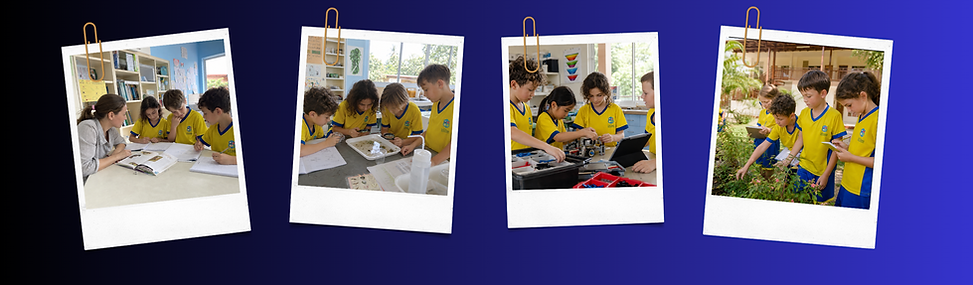
What pupils learn, how subjects connect and how learning develops from Year 1 to Year 6
Where Does My Child Fit?
Primary
Years 1–6 | Ages 5–11
Key Stage 1
Years 1–2 | Ages 5–7
Lower Key Stage 2
Years 3–4 | Ages 7–9
Upper Key Stage 2
Years 5–6 | Ages 9–11
What comes next? Year 7 begins Secondary School.
Our Curriculum
What curriculum does Si Ri Panya actually follow?
Our Primary curriculum is based on the National Curriculum for England and thoughtfully adapted for our international community in Thailand. It provides clear academic progression while allowing pupils to make meaningful connections between subjects, cultures and the world around them.
.jpg)
.jpg)
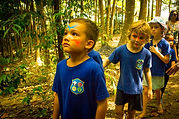
Strong foundations
English, Mathematics and Science develop progressively from Year 1 to Year 6, building the knowledge, skills and confidence pupils need for the next stage of learning.
A broad curriculum
Pupils also learn through History, Geography, Art, Design Technology, Computing, Religious Education, PSHE, Physical Education and Thai.
Connected learning
Where meaningful, subjects are linked through high-quality texts, shared questions, topics and practical projects. These connections help pupils apply what they know in different contexts, while each subject retains its own knowledge, skills and progression.
How learning connects
Learning is often strongest when pupils can make meaningful connections between subjects. At Si Ri Panya, high-quality texts, enquiry questions and practical projects are used to bring learning together where this adds value, while each subject retains its own knowledge, skills and progression.
Example: Year 3 Term 1 — Magical Worlds
This term shows how one shared theme can connect learning across several subjects in purposeful ways.


Text & Story
Enquiry
Investigation
Making
Outcome
History & Geography
Stone Age life, mountains, volcanoes and rivers
English
Character, setting and imagination
Art & Design Technology
Patterns, sculpture and sustainable packaging
Science
Bodies, nutrition and rocks
Explore the Primary Curriculum
Our Big Ideas overviews give parents a clear picture of what pupils will be learning across each term. They bring together the main areas of English, Mathematics, Science and the wider curriculum, while showing the themes, texts, questions and projects that help connect learning across subjects.
Select your child’s year group to explore the curriculum for the full academic year.


How Learning Develops
Mathematics
In Year 1, pupils build secure foundations in number, calculation and shape. By Year 3, they are working with numbers to 1,000, developing formal calculation methods and strengthening multiplication and division. By Year 6, pupils apply their understanding to larger numbers, fractions, ratio, algebra, percentages, area, volume and increasingly complex problem-solving.
Computing
Pupils begin by following simple algorithms, programming toys and using ScratchJr. This develops into coding with Scratch, animation, online collaboration and data logging, before progressing to 3D modelling, game design, podcasts, spreadsheets, Micro:bits and film-making in Years 5 and 6.
Science
Early science focuses on close observation, classification and simple investigation of the body, materials, plants and animals. As pupils progress, they investigate increasingly complex ideas including forces, electricity, sound, states of matter, ecosystems, the circulatory system, inheritance and adaptation, while developing greater independence in planning and carrying out scientific enquiries.
.png)
.png)
.png)
From Year 1 to Year 6, pupils build knowledge and skills in a carefully sequenced way. As they move through Primary, familiar ideas are revisited with increasing depth, independence and challenge.
English: Learning Through Powerful Texts
High-quality texts sit at the heart of English learning in Primary. Through carefully chosen books, pupils develop reading comprehension, vocabulary, speaking and listening, and increasingly confident writing.
Pupils do more than simply read a text. They discuss, question, perform, explore characters and viewpoints, and write for different purposes and audiences. As they move through Primary, they become increasingly independent in planning, drafting, editing and publishing their work. The Big Ideas overviews show this progression clearly, from talk, drama and early imaginative writing in Year 1 to extended, persuasive, reflective and analytical writing in Year 6.
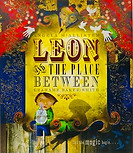


Our approach is supported by CLPE’s Power of Reading, which uses high-quality children’s literature as a starting point for rich and purposeful English learning.
Read
Discuss
Perform
Write
Mathematics: Building Understanding Step by Step
Mathematics is taught through White Rose Maths, providing a clear and carefully sequenced journey through number, calculation, geometry, measurement, fractions, statistics and problem-solving.

Pupils build secure understanding before moving on to increasingly complex concepts. Practical resources, visual representations, discussion and reasoning help children understand why methods work, not simply how to carry them out.
As pupils progress through Primary, they revisit important mathematical ideas with greater depth and challenge. The Big Ideas overviews show this progression clearly, from early number bonds and calculation in Year 1 to fractions, ratio, algebra, percentages, area, volume and multi-step problem-solving in Year 6.
Mathematics Curriculum Overview
See how White Rose Maths learning is sequenced across Years 1–6.
Science Through Investigation
Science in Primary is practical, enquiry-led and rooted in curiosity. Pupils ask questions, make predictions, investigate, observe closely, record what they find and use evidence to explain their thinking.
As they move through Primary, investigations become more sophisticated. In Year 4, pupils explore changes of state, sound and electrical circuits. By Year 6, they classify living things, investigate voltage and circuits, and explore inheritance, variation, adaptation and fossils through increasingly independent scientific enquiry.
Question → Investigate → Observe → Record → Explain
.png)
.png)
.png)
.png)
.png)

Computing, Coding and Technology

Computing develops from early digital skills and simple programming to increasingly independent coding, design and media production. Pupils learn not only how to use technology, but how to create with it, solve problems and understand how digital systems work.
In Year 1, pupils begin with simple algorithms, programmable toys and ScratchJr. By Years 3 and 4, they are coding with Scratch and using technology for collaboration and data logging. In Years 5 and 6, this develops into areas such as 3D modelling, game design, spreadsheets, Micro:bits and film-making.
Program → Create → Test → Refine → Share
.png)
.png)
.png)
.png)
.png)
Design, Creativity and Making
Art and Design Technology give pupils regular opportunities to imagine, design, make, test and improve. They work with a range of materials and processes, developing creativity alongside practical problem-solving and technical understanding.
The complexity grows across Primary. Younger pupils design and test structures and simple textile products; by Year 3 they are creating sustainable packaging and pneumatic toys. Older pupils move into projects such as interactive products, electric vehicles, sustainable architecture, automata and sensor alarms. Food and nutrition also form part of practical learning.
Imagine → Design → Make → Test → Improve
.png)
.png)

Learning Beyond the Classroom


Pupils might investigate local habitats, explore environmental change or work with recycled materials through projects connecting Science, Geography, Art and Design Technology.
Experience Learning Outcome
.png)
.png)
.png)
Koh Phangan provides a rich setting for learning beyond the classroom. Pupils use the local environment, community and real-world projects to deepen what they are learning in school and see how knowledge can be applied in practice.
Experiences include EOTC, excursions, visiting speakers, environmental projects and work linked to Precious Plastic. These are planned to connect directly with curriculum learning.
A Curriculum for Every Learner
Pupils arrive with different strengths, experiences and starting points. Our teachers use adaptive teaching to keep learning accessible, appropriately challenging and ambitious for every pupil.
Support may include adapted explanations, resources, additional challenge or targeted help where needed.
Pupils developing English can also access EAL and literacy support alongside classroom teaching.

Primary Family Handbook
Our Primary Family Handbook brings together practical information for families, including school routines, communication, uniform, attendance and everyday expectations.

From Primary to Secondary
By Year 6, pupils are working with increasing independence, depth and responsibility. They research and communicate more complex ideas, solve multi-step mathematical problems, carry out scientific enquiries, evaluate their own work and use technology for increasingly sophisticated purposes.
This prepares pupils for the move into Si Ri Panya Secondary School, where learning continues through Lower and Upper Secondary. Year 6 already includes work such as ratio and algebra, extended writing, spreadsheets and budgeting, scientific enquiry, film-making and design evaluation.

